Articles
Content That Matters
Author/Editor Maria Anna Furman
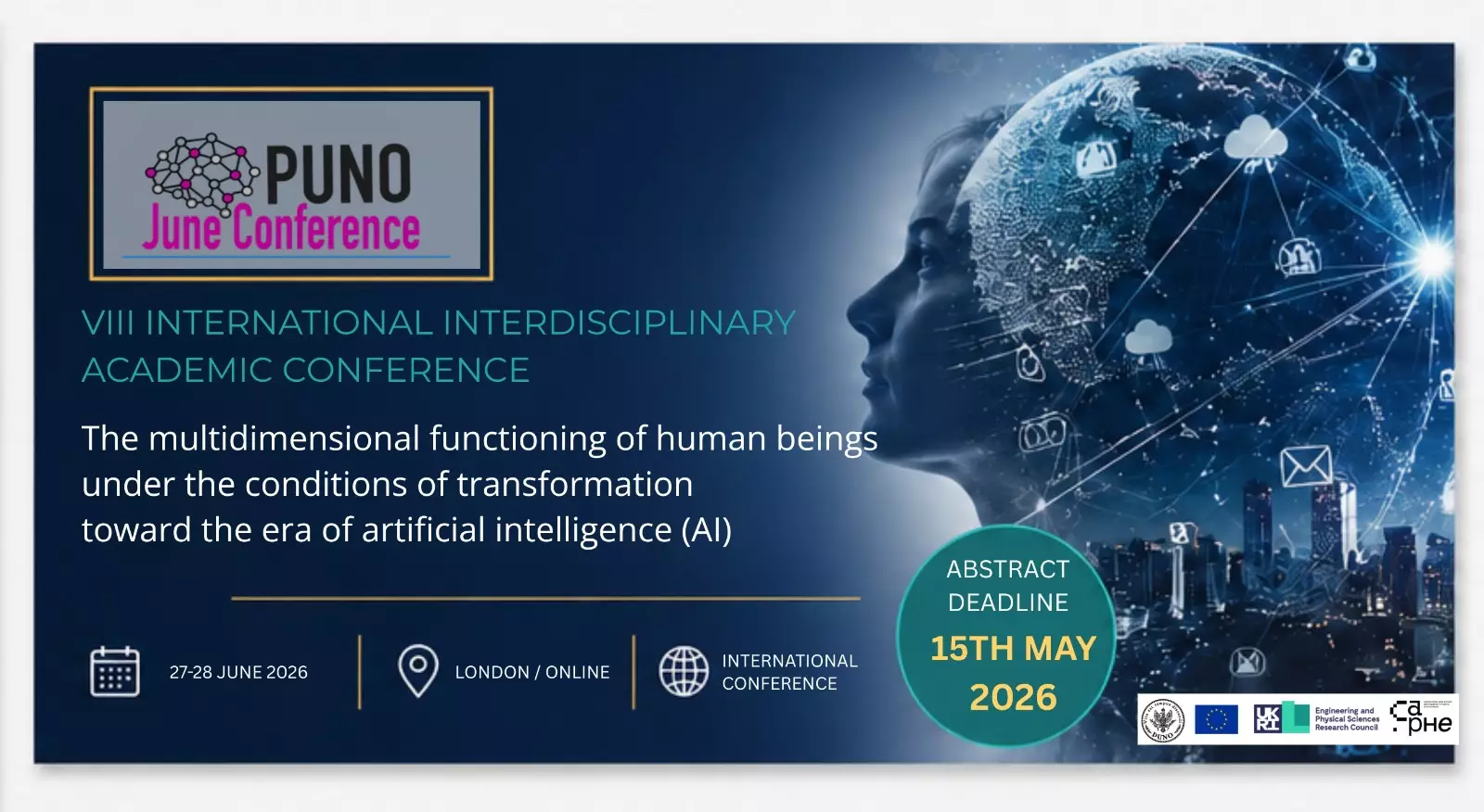
PUNO Invites You to London for a Unique International Scientific Conference
In a world where algorithms increasingly influence the way people communicate, learn, work, and function in everyday life, questions about the limits of technology are becoming not only a scientific debate but also a social necessity. These very issues will be the focus of the 8th International Interdisciplinary Scientific Conference organised by the Polish University Abroad (PUNO) in London.
The event will take place on 27 - 28 June 2026 at POSK in London and online, enabling participants from around the world to attend. This year’s edition of the conference is titled:
“The Multidimensional Functioning of Human Beings in the Conditions of Transformation into the Era of Artificial Intelligence (AI)”
The very topic of the conference demonstrates that the organisers intend to look at the development of artificial intelligence not only through the prism of technology, but above all through the prism of the human being, their psyche, emotions, social relationships, education, and the way reality is perceived.
For years, the PUNO conference has served as a meeting space for various academic, research, and artistic communities. This year’s edition, however, carries a particularly significant dimension. The rapid development of AI means the world is at a turning point between fascination with the possibilities of new technologies and the growing need to reflect on their consequences.
The organisers emphasise that artificial intelligence is no longer a futuristic vision but a real part of everyday life. It is now present not only in business and social media, but also in education, medicine, communication, culture, and social processes. This is precisely why this year’s conference will attempt to provide a multidimensional perspective on the transformations taking place within digital society.
Among the key topics of discussion will be:
psychology of new media,
human relationships with technology,
education in the AI era,
immersive VR and AR environments,
cybersecurity and data protection,
ethics of artificial intelligence,
digital communication,
social and cultural consequences of technological transformation.
As the organisers point out, one of the key reference points for this year’s discussions will be Guy Debord’s concept of the “society of the spectacle.” Contemporary human beings increasingly experience reality through images, algorithms, and digital narratives, which affects not only how people communicate but also how they build identity, social relationships, and self-perception.
The conference has an international and interdisciplinary character. Both experienced scientists and young researchers beginning their academic journey have been invited to participate. The organisers hope to create a space for the exchange of experiences, reflection, and dialogue between representatives of various scientific disciplines, as well as practitioners observing social transformations connected with the development of new technologies.
The ethical aspect also remains highly significant. Questions are increasingly being raised about the limits of artificial intelligence’s interference in human life, data security, the influence of algorithms on emotions and social decisions, and responsibility for the development of technologies that are beginning to co-create contemporary reality.
This year’s PUNO conference is intended to become a place not only for scientific analysis, but also for deeper reflection on the direction in which modern civilisation is heading.
The event will be held in both Polish and English, in a hybrid format, onsite in London and online.
8th International Interdisciplinary Scientific Conference of PUNO
27 - 28 June 2026
POSK London and online
Detailed information will soon appear on the website:
The media partner of the event is Wyspa TV.
Author/Editor Maria Anna Furman