Articles
Content That Matters
President of the Republic of Poland Karol Nawrocki, after talks in London: security, strategic cooperation and the Polish community at the centre of attention
Author/Editor: Maria Anna Furman
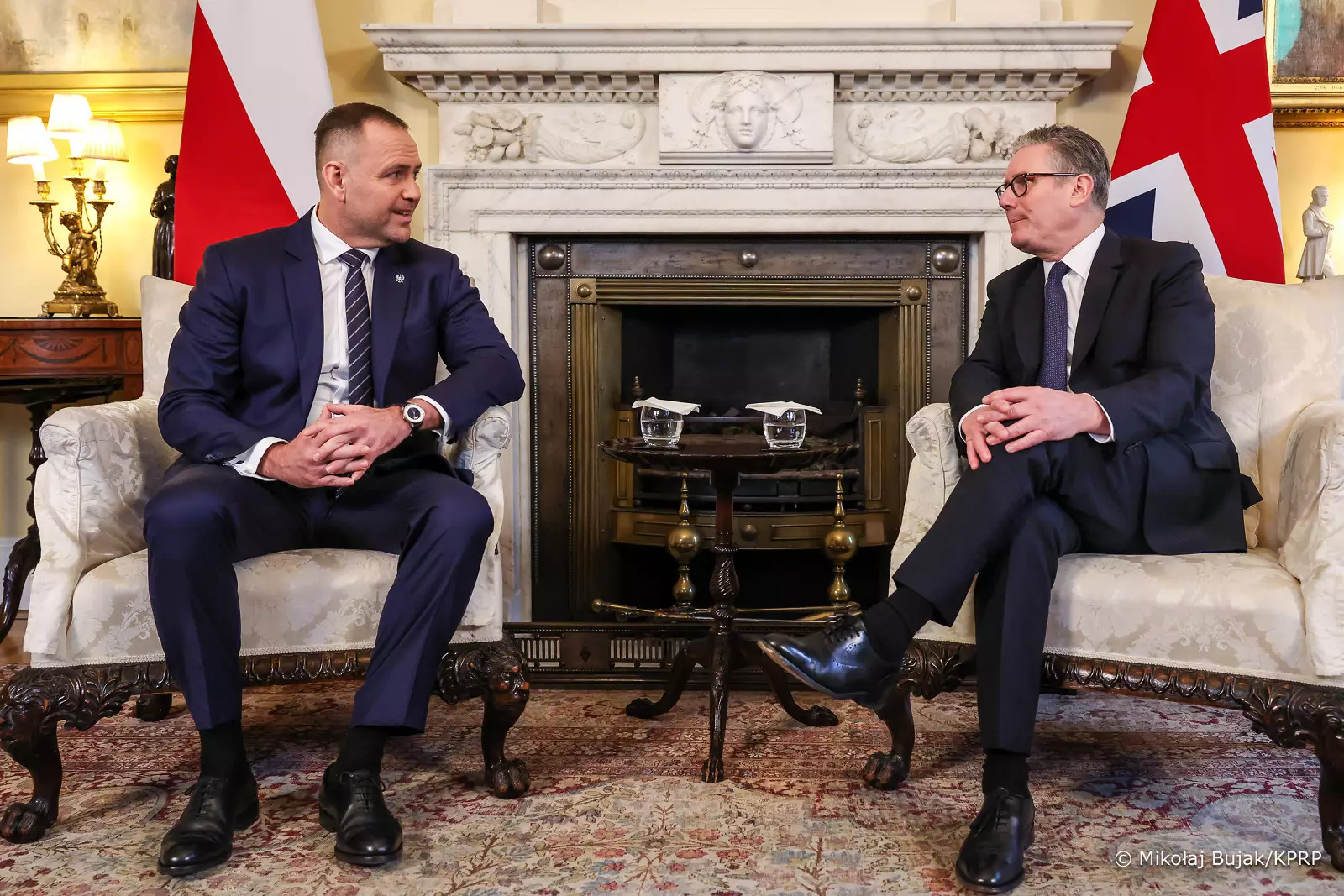
The President of the Republic of Poland, Karol Nawrocki, provided an update on the course of talks held with the Prime Minister of the United Kingdom, Keir Starmer. As he emphasised, the meeting covered a wide range of issues, with particular focus on security and economic affairs.
One of the main topics of the discussions was military cooperation between Poland and Great Britain. The President pointed to the presence of British soldiers on the territory of the Republic of Poland and to the solidarity demonstrated by the British side in connection with incidents related to the security of the Polish border. These issues were discussed as important elements of shared responsibility for security.
During the talks, the subject of cooperation between the Polish and British arms industries was also addressed. The President noted that both sectors, through the activities of companies and the projects being implemented, contribute to building the defence potential of the Republic of Poland. In this context, reference was made, among others, to projects related to the construction of frigates and the development of air defence systems.
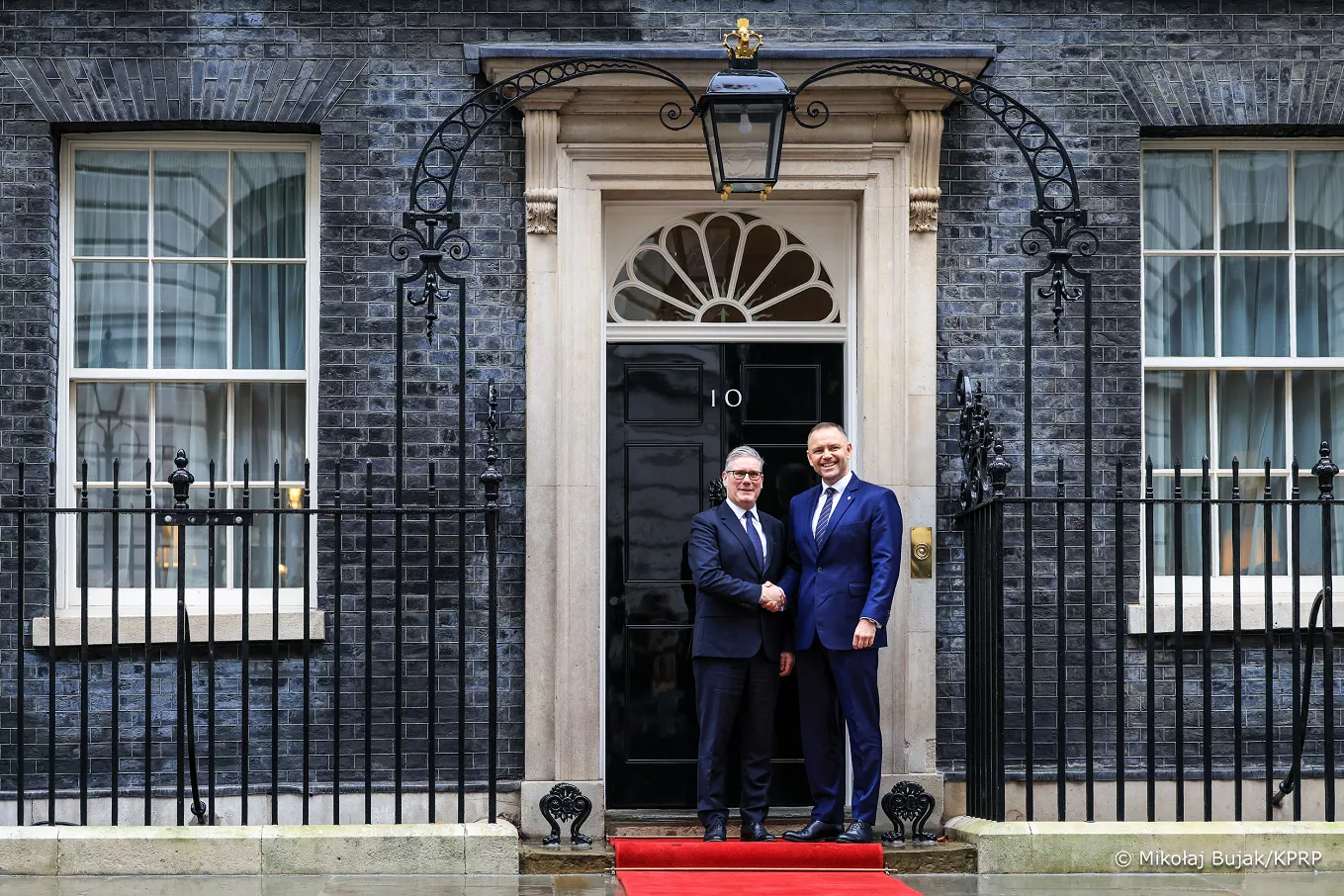
An important part of the discussions was also devoted to issues related to the G20 group. The President stated that these matters were discussed in the presence of representatives serving as sherpas on the Polish and British sides. He drew attention to the significance of Poland’s invitation to this format as a recognition of the country’s economic transformation after 1989 and emphasised the importance of taking this achievement into account in further international cooperation.
In his conversation with the Prime Minister of the United Kingdom, issues important for economic relations and for the functioning of Polish entrepreneurs on the British market were also raised. The President highlighted the importance of agreements on sanitary and phytosanitary regulations, which enable Polish small and medium-sized enterprises to conduct business in the United Kingdom.
A special place in the President’s statement was devoted to matters concerning Poles living in the United Kingdom. The President expressed satisfaction with the direction of actions to introduce Polish as a foreign language in the British education system. He emphasised that both he and the Polish authorities support solutions that will enable the Polish minority to choose Polish as a second language of instruction.
The President of the Republic of Poland assessed the talks as very good and stressed that they were conducted in a friendly atmosphere. He indicated that Poland and Great Britain remain allied states and maintain relations based on partnership and mutual trust.
In the latter part of his statement, the President referred to geopolitical issues, highlighting the strategic importance of Greenland. He emphasised that, in the face of threats from the Russian Federation and economic rivalry from China, these matters require broad discussion within the framework of international partnerships and should be resolved through diplomatic means.
The President also noted that responsibility for security and the values of the free world rests primarily with the North Atlantic Alliance, whose pillar remains the United States, and that voices regarding the strategic importance of Greenland should be treated as an element of this responsibility.
Regarding domestic affairs, the President expressed serious reservations about Poland’s public finances and the shape of the state budget. He emphasised that the government bears responsibility for the current budgetary situation, and that the decision regarding further proceedings on the budget bill remains open and requires particular prudence.
In his statement, the President also referred to relations between Poland and Hungary, emphasising their historical and partnership-based character within the European Union and regional cooperation. At the same time, he noted that decisions taken by sovereign states, including in asylum matters, fall within the competence of their authorities and are not subject to external assessment.
Concluding his statement, the President of the Republic of Poland, Karol Nawrocki, referred to the functioning of Poland's judicial system. He pointed out that some individuals cannot count on a fair trial, and that the decision to remain in the country or leave it is a choice for citizens. He also emphasised that decisions on granting asylum are the responsibility of the receiving states.
Author/Editor Maria Anna Furman