Articles
Content That Matters
Author/Editor Maria Anna Furman
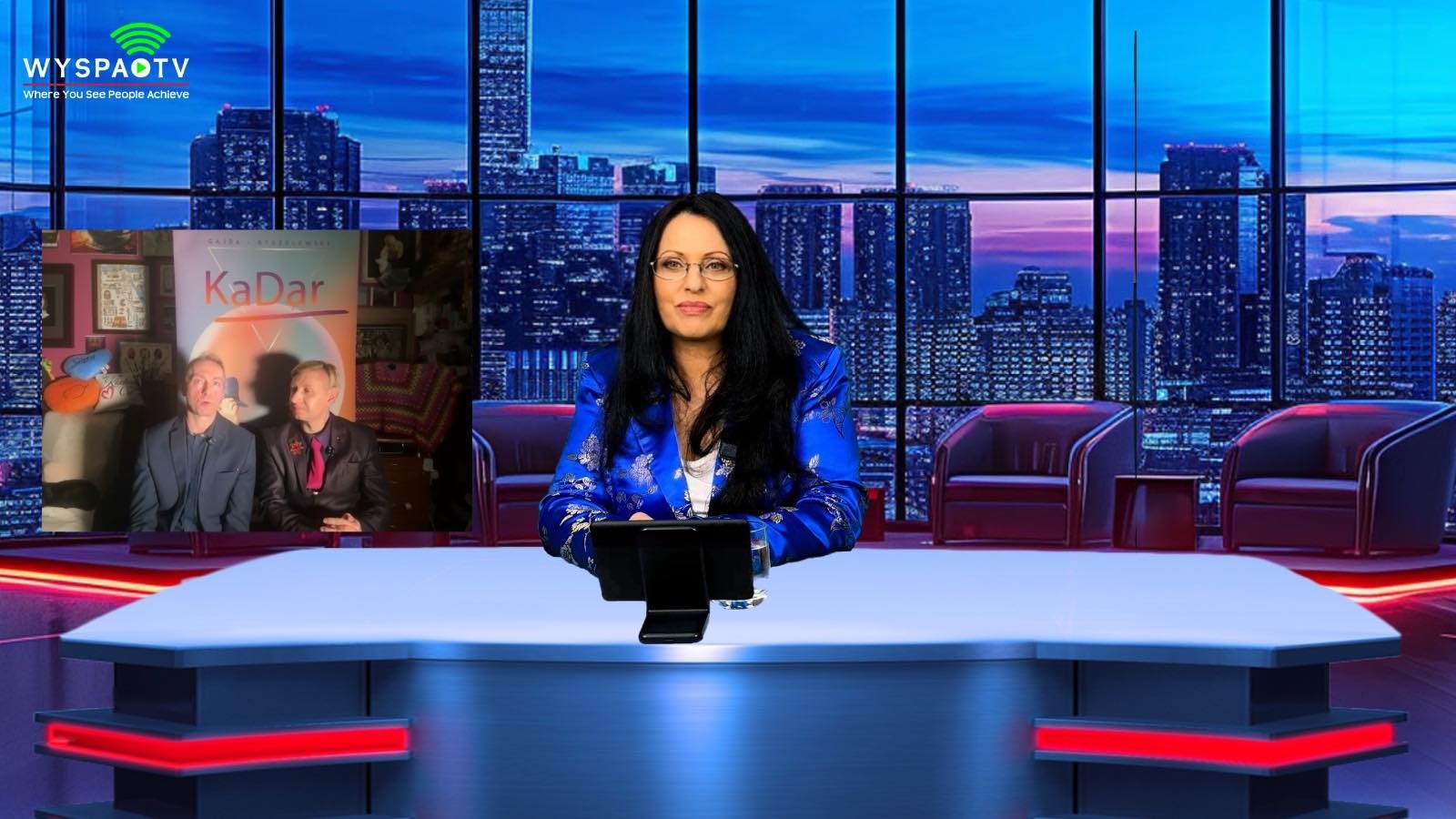
Sława Przybylska has, for decades, remained a symbol of class, sensitivity and the culture of the spoken word, but the conversation among editor Maria Anna Furman, Krzysztof Rydzelewski and Dariusz Gajda revealed something more than the story of a great career. It showed that a living space of activity is being created around the artist today: a foundation, a festival, new musical projects, as well as a conscious care for memory, respect and intergenerational dialogue.
One of the strongest threads of the conversation was the idea of establishing the Sława Przybylska “Sława” Foundation while the artist is still alive. As the interviewees emphasised, they did not want to create an institution that would deal with the artist’s legacy only after her passing. They cared about something much more authentic: that Sława Przybylska herself should participate in the life of her foundation, co-create it and have a real influence on how the memory of her work develops. In this vision, it is not about a monument to the past, but about presence and continuity.
From the statements of Krzysztof Rydzelewski and Dariusz Gajda, a picture emerged of activities intended not only to protect the artist’s legacy but also to restore it to new audiences. Social media proved to be an important element of this process. It was thanks to them that it became possible to show Sława Przybylska as an artist who is still present, active and capable of arousing the interest of the younger generation as well. The interviewees did not hide that at the beginning, this required patience and overcoming resistance. There were voices of distrust, suggestions that such actions made no sense, and even hate. Today, however, it is clear that this path has achieved the expected result. The artist gained greater visibility, and her work began to reach a wider audience.
Another important topic of the conversation was the foundation's social mission. The guests emphasised that their activities are not directed exclusively at one group. Yes, they devote much attention to seniors and people at risk of social exclusion, but the meaning of this work is much broader. It is about social integration and intergenerational encounters. About a situation in which older people are not pushed to the margins, and younger people do not lose contact with experience, culture and memory. The foundation is meant to connect people through art, shared events, and the creation of a space where everyone can feel part of a community.
The conversation also showed that behind this activity are not only ideas but also everyday, demanding work. Krzysztof Rydzelewski spoke about the challenges related to acquiring sponsors and partners, without whom it is difficult to develop further projects. Dariusz Gajda openly recalled the initial lack of trust and how much effort it cost them to prove that the foundation makes sense and is being created for the right reasons. This is an important part of the story because it shows that valuable initiatives are not born in a vacuum. They often first have to go through a stage of misunderstanding.
The subject of hate also resonated particularly clearly. Maria Anna Furman drew attention to the painful situation the artist herself has recently faced. The interviewees' reaction was unequivocal: there is no consent to insulting another human being, especially a public figure who has worked her whole life to build her achievements and image. Krzysztof Rydzelewski emphasised that the internet is not a space of impunity and that defending the artist’s good name is not an exaggeration but a duty. In this part of the conversation, the thought strongly resonated that today, care for the culture of language is just as important as care for artistic culture.
One of the most moving moments of the interview was the thread concerning Sława Przybylska’s new album with songs by Jewish poets. As the guests said, this is not an ordinary musical project, but a personal tribute and a record of memory. The album has special significance because it is connected with the artist’s wartime memories. As a child, she witnessed the tragedy of her Jewish peers. Therefore, the new album was presented not only as an artistic event but also as a profound gesture of memory and opposition to forgetting. In a world full of tension and violence, such a voice resonates with particular strength.
A natural extension of these activities is the First Nationwide Sława Przybylska Song Festival, the final of which will take place on 12 June in Międzyrzec Podlaski. The interviewees emphasised that this will not be an ordinary vocal competition, but an event carrying an intergenerational and cultural message. Międzyrzec Podlaski was not chosen by accident. This place is strongly connected with the artist, and that is precisely why the festival has its natural roots there.
The guests pointed out that in the competition, the most important thing will be not only technique but, above all, interpretation, emotional truth, and understanding of the text. This is very significant because Sława Przybylska’s repertoire requires something more than just correct performance. It requires sensitivity, attentiveness and authenticity. In this sense, the festival is intended not only to promote participants, but also to remind us that a good song is an encounter with meaning, and not merely a display of voice.
The entire conversation, therefore, clearly showed that something much more important than merely recalling a legend is happening around Sława Przybylska today. The foundation, the festival, the new album and the daily care for the artist’s presence in public life create a coherent story about memory, responsibility and culture that is still capable of bringing people together. This is not a project built on nostalgia. It is an attempt to give the artist’s legacy new life and meaning.
And that was precisely the strongest message of this conversation: Sława Przybylska does not belong exclusively to the past. Her voice, her attitude, and her artistic world still have the power to make an impact. And everything indicates that this story is only now writing its next chapter.
Author/Editor Maria Anna Furman