Articles
Content That Matters
Conference of the President of the Republic of Poland and the President of the National Bank of Poland
Author/Editor Maria Anna Furman
Poland Seeks an Alternative to the European SAFE Programme
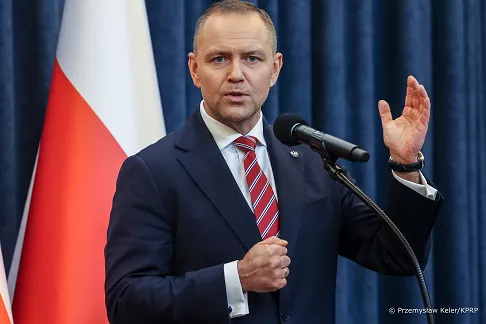
A press conference was held at the Presidential Palace with the participation of the President of the Republic of Poland, Karol Nawrocki, and the President of the National Bank of Poland, Professor Adam Glapiński. The meeting was devoted to one of the most important challenges of contemporary state policy: financing security and the development of the Polish Armed Forces. At the centre of the discussion was the European defence financing mechanism SAFE, as well as the President’s proposed alternative solution referred to as “Polish SAFE 0%.”
At the beginning of his speech, the President stressed that Poland is currently facing a particularly demanding moment in history. The dynamic international situation, the war in Ukraine, tensions in the Middle East, and growing geopolitical threats mean that the development of the state’s defence capabilities has become a key priority for the public authority.
As Commander-in-Chief of the Polish Armed Forces, the President indicated that the expansion of the army, the modernisation of military equipment, and the strengthening of the Polish defence industry are among the most important elements of the state’s security strategy. At the same time, he emphasised that security cannot be considered solely in military terms.
Security means stability. Lack of stability means lack of security, he stressed.
According to the President, financial stability and sovereignty in making strategic decisions are just as important as the size of the army or the level of armament.
A significant part of the speech was devoted to the European SAFE programme, which provides for financing defence expenditure through credit-based mechanisms at the European Union level.
The President noted that many emotions and controversies have arisen in the Polish public debate surrounding the programme. In his view, any decision regarding Poland’s participation in this mechanism requires a detailed analysis, both financial and legal.
One of the main arguments raised by the President concerns intergenerational responsibility. He pointed out that liabilities arising from the SAFE programme could be repaid as late as 2070.
In a symbolic comparison, the President noted that by the time the programme ended, the current Prime Minister of Poland would be over one hundred years old, while the burden of repaying these obligations would fall on generations of Poles who are only now growing up.
Our national community is a community of all generations of Poles, including those who do not yet participate in elections today but who will bear responsibility for decisions being made now.
The President also drew attention to potential legal uncertainties regarding the SAFE mechanism. In his assessment, some elements of the programme may raise questions regarding compliance with the European treaties.
In this context, he referred to Article 4 of the Treaty on European Union, which indicates that matters of security and defence remain, above all, within the competence of the Member States.
The President also stressed that Poland, as a country located on NATO’s eastern flank, must preserve maximum flexibility in planning its defence strategy.
In his speech, the President also referred to Poland’s existing policy of purchasing military equipment. He recalled that over the past decade, the Polish Armed Forces have concluded a number of contracts with partners from outside the European Union, including the United States and South Korea.
According to the President, international developments, including recent military operations by the United States in the Middle East, demonstrate the high effectiveness of American military equipment.
Therefore, as he emphasised, Poland should retain the ability to choose the most effective military technologies regardless of their origin.
The most important element of the conference was the presentation of an alternative defence financing concept called “Polish SAFE 0%.”
As the President explained, the idea emerged after a series of meetings with experts at the Chancellery of the President and discussions with the leadership of the National Bank of Poland.
According to the assumptions presented, Poland could allocate approximately 185 billion PLN to the development of the Armed Forces over the next five years through financial mechanisms based on domestic resources.
The key difference compared with the European SAFE programme would be that these funds would not be linked to long-term credit or interest payments.
It would be a sovereign, safe mechanism free from borrowing costs, which is why we call it SAFE 0%.
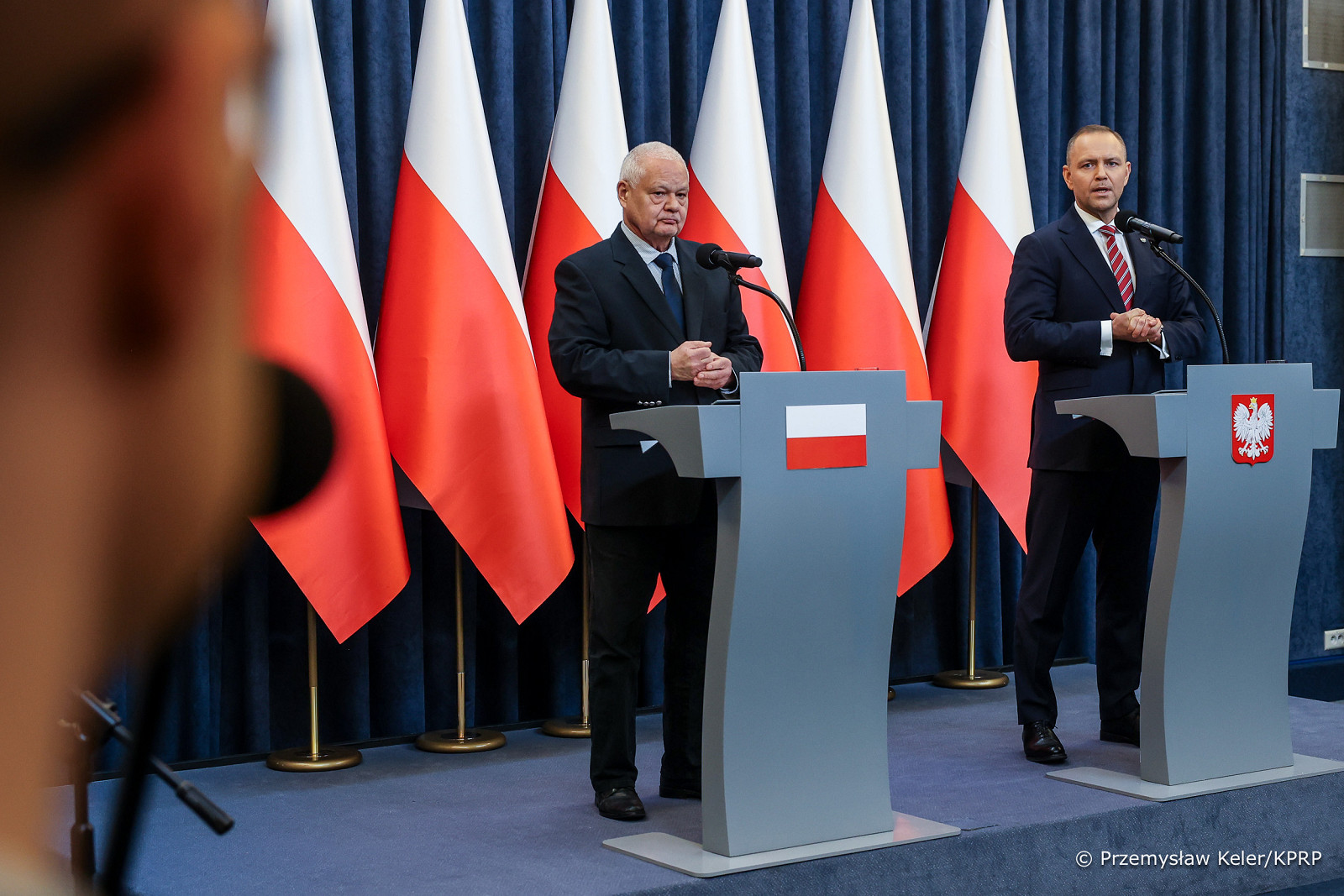
An important role in this concept is played by the actions of the National Bank of Poland, including increasing reserves and purchasing gold.
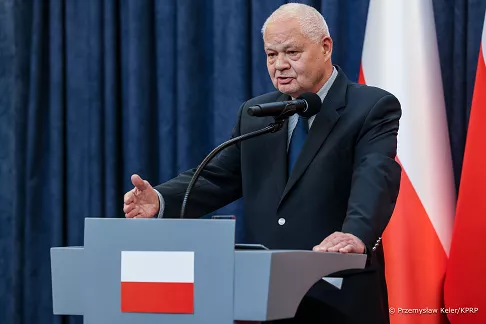
During the conference, NBP President Professor Adam Glapiński stressed that the central bank is a public trust institution operating within clearly defined legal provisions.
He noted that all actions taken by the National Bank of Poland must remain compliant with both the Constitution of the Republic of Poland and the regulations of the European System of Central Banks.
At the same time, he confirmed that there are mechanisms that can support the state’s defence effort.
NBP is an apolitical institution. We cooperate with the government and the President regardless of the political arrangement, because we represent the interests of all Poles, he stressed.
The Bank’s President also pointed out that the Polish economy has performed very well in recent years and that the country’s economic growth rate is among the highest in Europe.
Throughout the conference, it was repeatedly emphasised that issues of national security should remain above political disputes.
The President of the NBP pointed out that building a strong army is a task spanning many years and requires the effort of the entire state.
When political divisions disappear in matters of security, we as a nation can achieve a great deal, he noted.
In response to journalists’ questions, the President announced that he would send an official invitation to Prime Minister Donald Tusk and to Deputy Prime Minister and Minister of National Defence Władysław Kosiniak-Kamysz.
The purpose of the meeting would be to discuss the possibility of implementing the “Polish SAFE 0%” programme as an alternative to the European defence financing mechanism.
The President also noted that his final decision on the legislation related to the SAFE programme would be made within the constitutionally prescribed timeframe.
During the conference, questions were also raised concerning the current international situation, including the evacuation of Poles from the Middle East region and potential terrorist threats.
The President assured that Polish institutions responsible for security are constantly monitoring developments and remain ready to take appropriate action.
The conference at the Presidential Palace showed that Poland is now facing an important decision concerning the method of financing the development of its Armed Forces.
On the one hand, the European SAFE programme remains a possibility; on the other, there is the concept of a sovereign financing mechanism based on domestic financial resources.
The final direction of the decision will be worked out through dialogue among the President, the government, and the state institutions responsible for the country’s financial stability.
One thing, however, remains beyond dispute: in the face of the changing international situation, the issue of Poland’s security is becoming a subject that requires strategic decisions taken with future generations in mind.
Jeśli chcesz, mogę od razu przygotować też bardziej medialną, elegancką wersję po angielsku, w stylu artykułu do publikacji.
Author/Editor Maria Anna Furman
Source: Official website of the President of the Republic of Poland