Articles
Content That Matters
The Fourth and Final Part of the First Edition of Leaders of Tomorrow | The Power of the Brand, the Power of the Human vs AI | A Debate in Which Technology Took a Back Seat
Author/Editor Maria Anna Furman
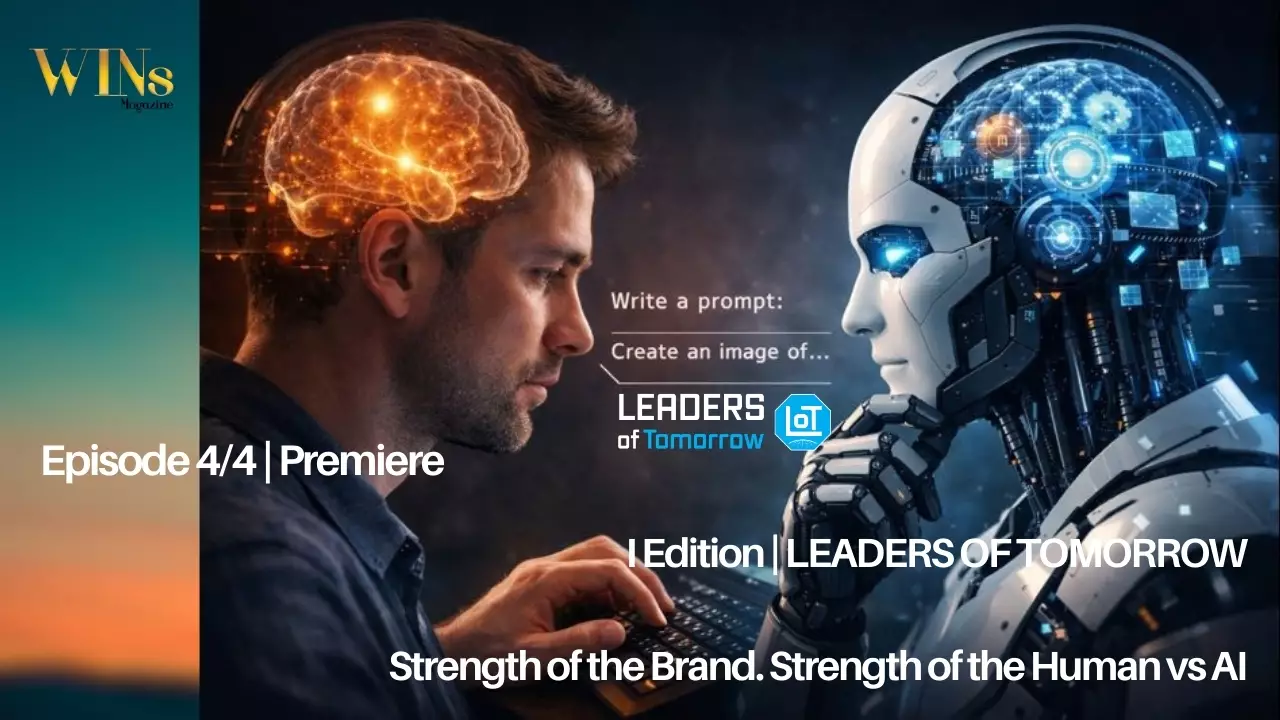
The fourth part of the programme, “Leaders of Tomorrow. The Power of the Brand, the Power of the Human vs AI”, marked a clear turning point in the entire series. It was here that the discussion shifted from a focus on technological capabilities to a deeper consideration: human responsibility, leadership awareness, and the boundaries that no algorithm can cross.
The programme as a whole took the form of a debate, but the fourth part departed from the classic expert panel format. A random element was introduced, and participants responded spontaneously. This approach made the conversation authentic, at times uncomfortable, but precisely because of that, genuine.
From the outset, a key theme emerged: the ease with which responsibility is shifted to systems, software, and algorithms. Participants noted that technology often becomes a convenient alibi: “it’s the system,” “it’s a software error,” “it’s automated.” Yet the fourth meeting in the series made it clear that the leader of the future cannot hide behind technology, even as it becomes increasingly sophisticated.
The discussion emphasised that while AI can streamline processes, analyse data, and accelerate decision-making, it does not absolve humans of responsibility for the consequences of those decisions. It is the leader, not the algorithm, who bears the responsibility.
One of the strongest moments of the fourth episode was the discussion about human naivety towards artificial intelligence. Participants noted that AI is increasingly treated as a universal solution, a shortcut to knowledge, decision-making, and even to “living life.”
Reflections were shared on the replacement of independent thinking, creativity, and reflection with ready-made answers. It was stressed that the problem is not the tool itself, but the uncritical surrender of successive areas of human decision-making to it. In this context, the issue of AI personalisation also raises concerns about systems that “learn” about users, begin to speak their language, and create the illusion of a relationship.
It was here that a clear boundary was drawn: AI can simulate understanding, but it does not experience emotions.
Subsequent questions directed the conversation towards the concept of authority. Can artificial intelligence help build a leader’s authority, or does it instead flatten it, standardising it and feeding ego rather than responsibility?
Participants unanimously stressed that, without inner awareness and vigilance, AI can become a mirror that reflects only what is comfortable, thereby confirming beliefs and reinforcing narratives of success, while failing to confront leaders with difficult realities. And it is precisely this confrontation that underpins mature leadership.
In the second part of the programme, the discussion clearly shifted towards future human competencies. Responses highlighted relational skills, empathy, and the ability to understand emotions, both one’s own and others'. It was emphasised that while AI can analyse indicators, it does not understand the meaning of silence, doubt, fear, or inner struggle.
The idea repeatedly returned that a leader’s identity, self-awareness, and authenticity will, in the coming years, matter more than perfect knowledge or tools.
The final part of the fourth episode had a summarising yet deeply personal character. Participants were asked to identify one value they would like to carry into the future. Answers included love, awareness, self-acceptance, loyalty, and emotions.
The programme concluded with a clear message: technology may change the world, but the future is created by people who can pause, ask questions, and remain human.
The fourth part of “Leaders of Tomorrow” demonstrated that the true strength of a brand and of leadership does not lie in algorithms, but in courage, attentiveness, and responsibility for another human being. It is an episode that does not offer easy answers, but leaves the viewer with questions, and that is precisely why it remains memorable.
Author/Editor Maria Anna Furman